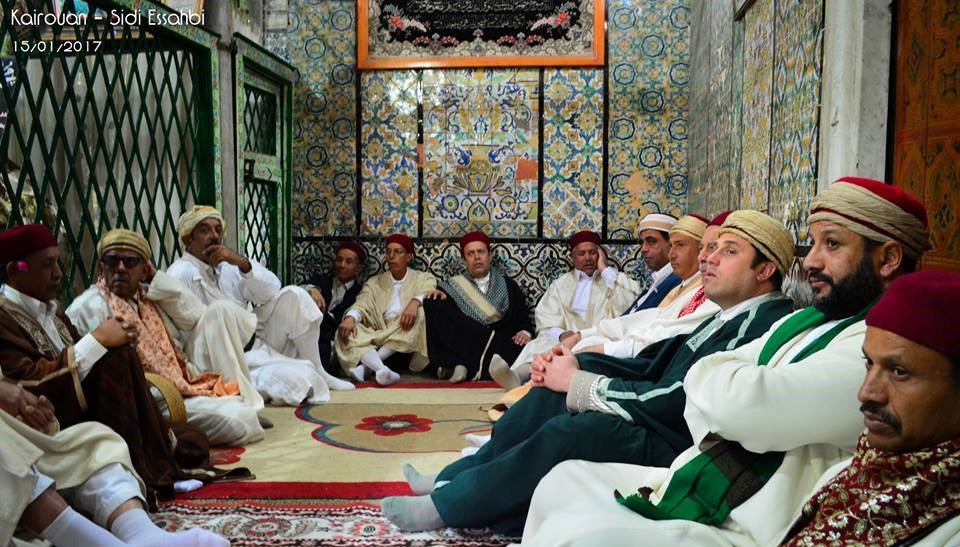
The Hadra ritual Sufi chant explained is a fascinating gateway into the universe of Tunisian Sufism. Practiced for centuries in Sidi Bou Saïd, this musical and spiritual rite—embodied notably by the Issawiya and Châdhuliyah brotherhoods—is a cornerstone of Tunisia’s mystical culture. Blending chanting, invocations, rhythmic movements, and collective trance, the Hadra is far more than a concert: it is a transformative spiritual experience. This article explores the depths of this ritual, from its historical roots to its contemporary expressions in Sidi Bou Saïd, a maraboutic village and living sanctuary of Sufi traditions.
The Hadra Ritual: Origins, Symbolism, and Structure
The word Hadra means “presence” in Arabic, signifying the divine presence among the circle of devotees. Practiced within zaouias or during public events like the Kharja, the Hadra consists of three main phases:
- Chanted collective invocation (dhikr): repetition of divine names.
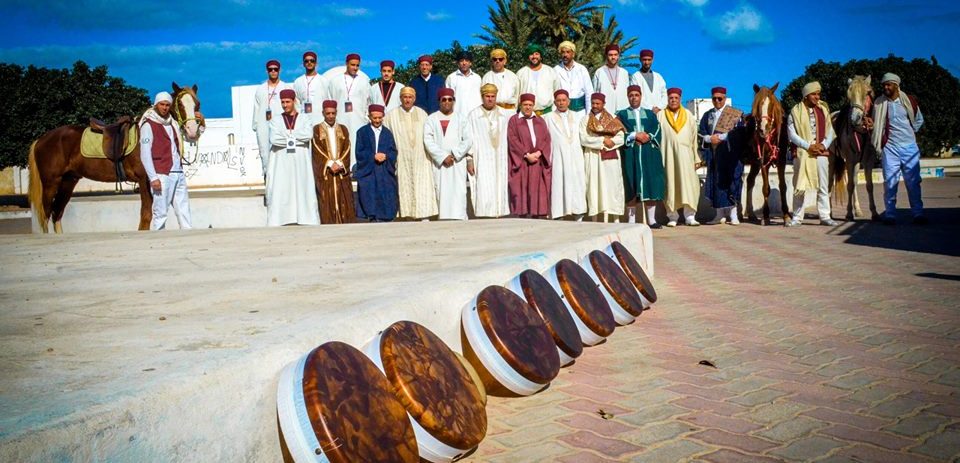
- Trance elevation: accompanied by drums (tabl), oboes (zokra), and syncopated rhythms.
- Return to calm: reintegration into the material world after the spiritual trance.
These rituals are closely tied to the al’âdah ach-Châdhuliyah, a spiritual path originating in the Maghreb and founded by Abul Hassan al-Châdhili. They serve as a purification of the soul and an elevation toward divine consciousness.
Sufi Chant in Sidi Bou Saïd: A Living Tradition
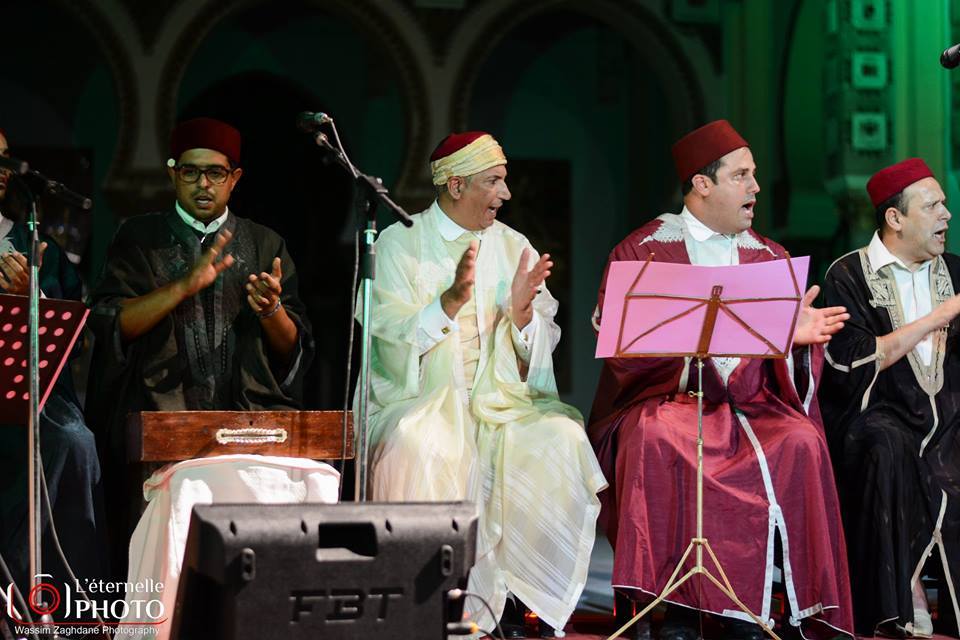
The Issawiya Sufi chant still echoes through the walls of the zaouias and the flower-lined alleyways of Sidi Bou Saïd. It is an integral part of Tunisia’s living musical heritage. Institutions such as the Zaouia of Sidi Bou Saïd, the Palais Ennejma Ezzahra, and the Association for the Renaissance of Maalouf and Sufi Chant—led by Cheikh Mouhamed Farouk Chlagou—ensure the transmission of this sacred knowledge.
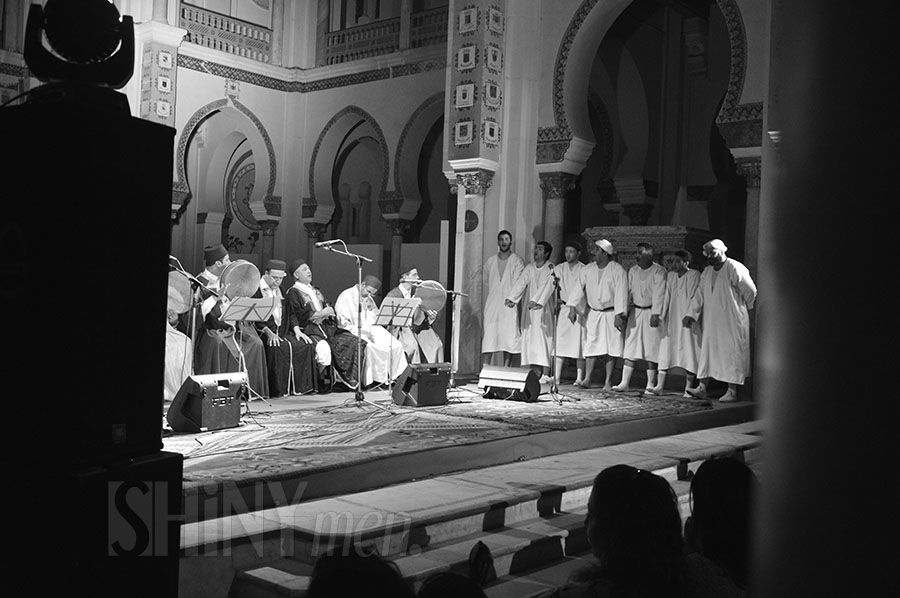
The Hadra is also featured in the Sufiyet Festival program, with performances by artists such as Cheikh Hatem Ferchichi and the Issawiya Ensemble of Tunis. The festival combines musical performances with dhikr workshops.
Practical Guide to Attending a Hadra in Sidi Bou Saïd
For enthusiasts and curious visitors, here are some helpful tips:
When?
- Weekly: during regular Thursday night gatherings in the zaouias.
- On religious holidays (e.g., Mawlid, Isra’ wal-Mi’raj).
- During the Sufiyet Festival (March 19–22, 2025).
Where?
- Zaouia of Sidi Bou Saïd
- Palais Ennejma Ezzahra (Arab and Mediterranean Music Center)
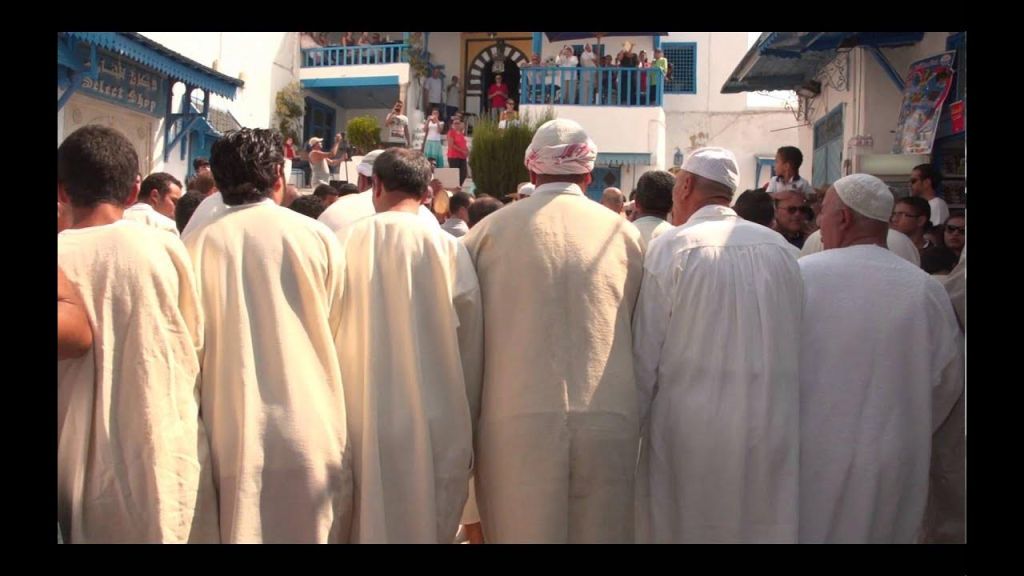
- Public spaces during the Kharja procession
How to attend?
- Most regular Hadra gatherings are free to attend.
- Tickets for the Sufiyet Festival available on the CMAM website.
Advice:
- Respect the silence and meditative atmosphere.
- Dress modestly and appropriately.
Why Sidi Bou Saïd Is a Spiritual and Cultural Landmark of Tunisian Sufism
Linked to Abou Saïd al-Baji, a 13th-century mystic, Sidi Bou Saïd maraboutic village is a crossroad of spiritual influences. It has been home to various Sufi paths such as al-’âdah ach-Châdhuliyah, Issawiya, and oral musical traditions.
The Palais Ennejma Ezzahra, built by Baron Rodolphe d’Erlanger, played a major role in documenting and preserving Maalouf, the classical secular Andalusian music of Tunisia, as well as Sufi musical traditions. Key figures like Cheikh Ahmad al-Wâfi, a renowned spiritual and musical master, helped establish the Hadra as a major cultural and religious expression of Tunisia.
Conclusion
The Hadra Sufi chant ritual in Sidi Bou Saïd is not just a performance—it’s a mystical journey, a meeting of self, others, and the Divine. Carried by powerful voices, hypnotic drums, and collective fervor, it bridges past and present, local roots and universal spirituality. For anyone seeking to understand the musical soul of Tunisia, the Hadra is an essential gateway.
→ Visit chantsoufi.com for more info on upcoming Sufi events and spiritual gatherings in Sidi Bou Saïd.
FAQ
1. What is the Hadra in Sufism?
It is a Sufi musical and spiritual ritual that combines chanting, invocation, and movement aimed at spiritual awakening.
2. What is the difference between the Hadra and the Kharja?
The Hadra takes place indoors, within zaouias; the Kharja is an outdoor procession through village streets.
3. Can visitors attend a Hadra?
Yes, most Hadra ceremonies are open to the public, especially during festivals.
4. What role does Issawiya chanting play in the Hadra?
It drives the trance phase with powerful instruments and communal invocations.
Glossary
- Hadra: A spiritual and musical Sufi ritual focused on divine presence.
- Issawiya: A Moroccan mystical brotherhood present in Tunisia.
- Kharja: A public and festive Sufi procession.
- Zaouia: A spiritual site for Sufi practice and teaching.
- al’âdah ach-Châdhuliyah: A Maghrebi Sufi path founded in the 13th century.
 CHANT SOUFI
Laisser un commentaire